Pocket guide 02 / Day planning
A day that leaves room to wander
A route can look tidy on a screen and feel exhausting on the ground. Build around the day you can enjoy, not the list you could theoretically complete.
AI is good at arranging named places into an appealing sequence. It is less reliable at understanding the friction between them: finding the right exit, waiting for a lift, locating lunch or discovering that the entrance is on the far side of a large building. A useful itinerary makes those ordinary moments visible. Begin with a loose structure, then add precision only where the day genuinely needs it.
Choose one anchor, then protect it
Your anchor is the experience you most want the day to hold. It could be a museum, a coastal walk, a family visit or simply an afternoon in one neighbourhood. Give it enough space to be worthwhile. Do not let several lesser suggestions squeeze it into an unrealistic slot.
For example, if the Rijksmuseum is your main interest in Amsterdam, ask for a day organised around that visit rather than a race through every nearby attraction. Confirm the museum’s own admission and visitor information before assigning a time. An AI-generated schedule is not a ticket, and a suggested slot is not evidence of availability.
Cluster by usable routes, not straight lines
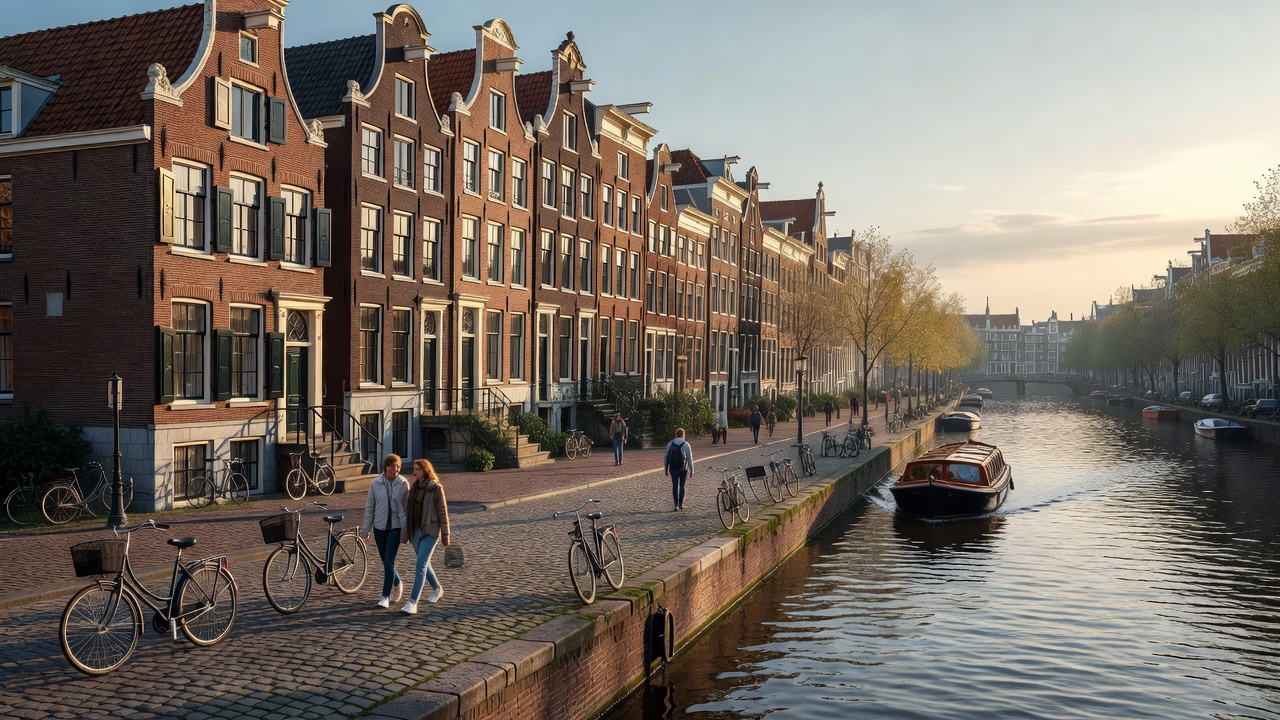
Ask the guide to group possibilities by neighbourhood and explain the route between them. A map distance alone does not account for canals, major roads, station changes or step-free access. In Venice, bridges can matter more than the apparent proximity of two pins. In Lisbon, the effort of a climb can change a short walk considerably.
Check the proposed movement in an appropriate mapping or transport service, then verify any critical service details with the operator. Keep the actual entrance in mind. A large station or museum may have several entrances with different access arrangements. Specify your likely starting area without sharing a private accommodation address in a public conversation.
Give the day a roomy sequence
Use phases before exact times. That prevents an early draft from looking more certain than it is. The illustrative sequence below is a planning pattern, not a bookable itinerary or a claim about a particular venue’s hours.
- Arrive and orientateAllow time to find the entrance, use facilities and settle into the area.
- Enjoy the anchorProtect the main visit rather than compressing it between optional stops.
- Eat and restKeep a realistic pause, with a backup if the first place is unsuitable.
- Choose one nearby possibilityContinue only if your energy and the conditions support it.
- Return without a rushLeave a margin before any fixed departure or evening commitment.
Once the pattern works, add times to the genuinely fixed elements. Keep the rest as a range or an optional block. Ask the guide which assumptions make the sequence fragile. That question often reveals a tight connection or a meal break that has quietly disappeared.
Budget for attention as well as movement
Walking distance is only one form of effort. A dense exhibition, noisy market or complicated interchange can use more energy than expected. Explain what tends to tire you. If you need regular seating, accessible toilets or a low-stimulation break, treat those needs as part of the route rather than optional extras.
Do the same with money. Ask the guide to separate confirmed prices from rough estimates and to identify costs that are easy to forget, such as local transfers or reservation fees. Check exact charges at the source before committing. A neatly totalled budget can still be wrong if its ingredients are outdated.
The most useful itinerary edit is often a deletion.
Make an alternative that is genuinely easier
A rain plan should not simply replace every outdoor stop with a busy indoor attraction across town. A low-energy plan should not involve more transfers. Ask for one alternative that reduces movement and removes dependencies. In Paris, for instance, a day centred on the Musée d’Orsay should not automatically grow a distant second museum when the weather changes.
Decide in advance what can be dropped without disappointment. Label each item as essential, optional or reserve. If the anchor becomes unavailable, pause and choose again rather than trying to preserve the original route at all costs. The value of the day comes from the experience, not from completing the draft.
Save a version you can use offline
Keep a short note containing the anchor address, confirmed booking details, the return route and essential access information. Store sensitive confirmations securely rather than pasting them into an AI chat. Download the maps or tickets you are entitled to use offline, and retain an independent way to navigate if your assistant loses connection.
Before leaving, ask one final question: “What is the first thing I should remove if we start late?” An answer you agree with makes the itinerary more forgiving. Tomorrow’s plan can remain a draft until you know how today actually felt.